
-
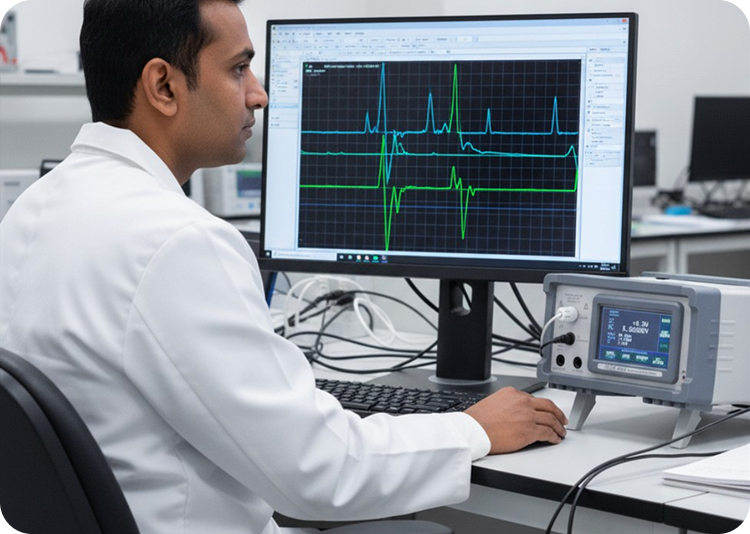 01 Smart InterfacingStandard computer interfaces enable seamless test automation with QT Insite software, included across all series for enhanced productivity in production and compliance environments.
 -
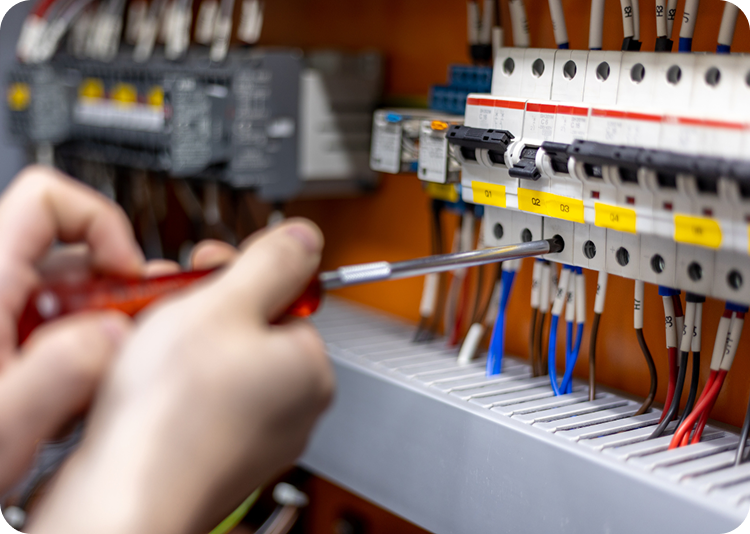 02 Multi-Point TestingPair any Vitrek hipot tester with the 964i switching system to build a comprehensive multi-point hipot testing solution, routing high voltage signals to any test point with individual relay control and fully automated data acquisition.
 -
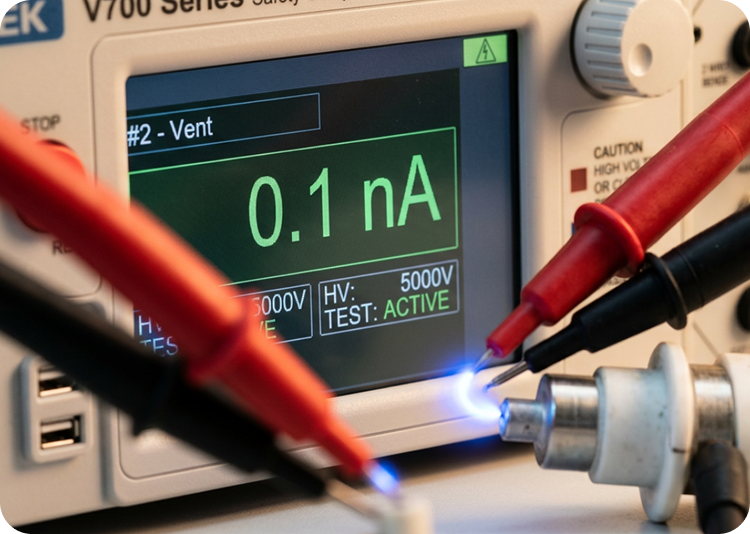 03 High Output PowerThe 95X Series delivers significantly higher output power with exceptional leakage current resolution, 0.1 nano-amp resolution across AC and DC hipot, insulation resistance, and ground bond testing. Built for the most demanding compliance and production environments.