Published on Mar 25, 2026
Are IC Sockets Necessary? When Engineers Should Use Test Sockets Instead of Soldering
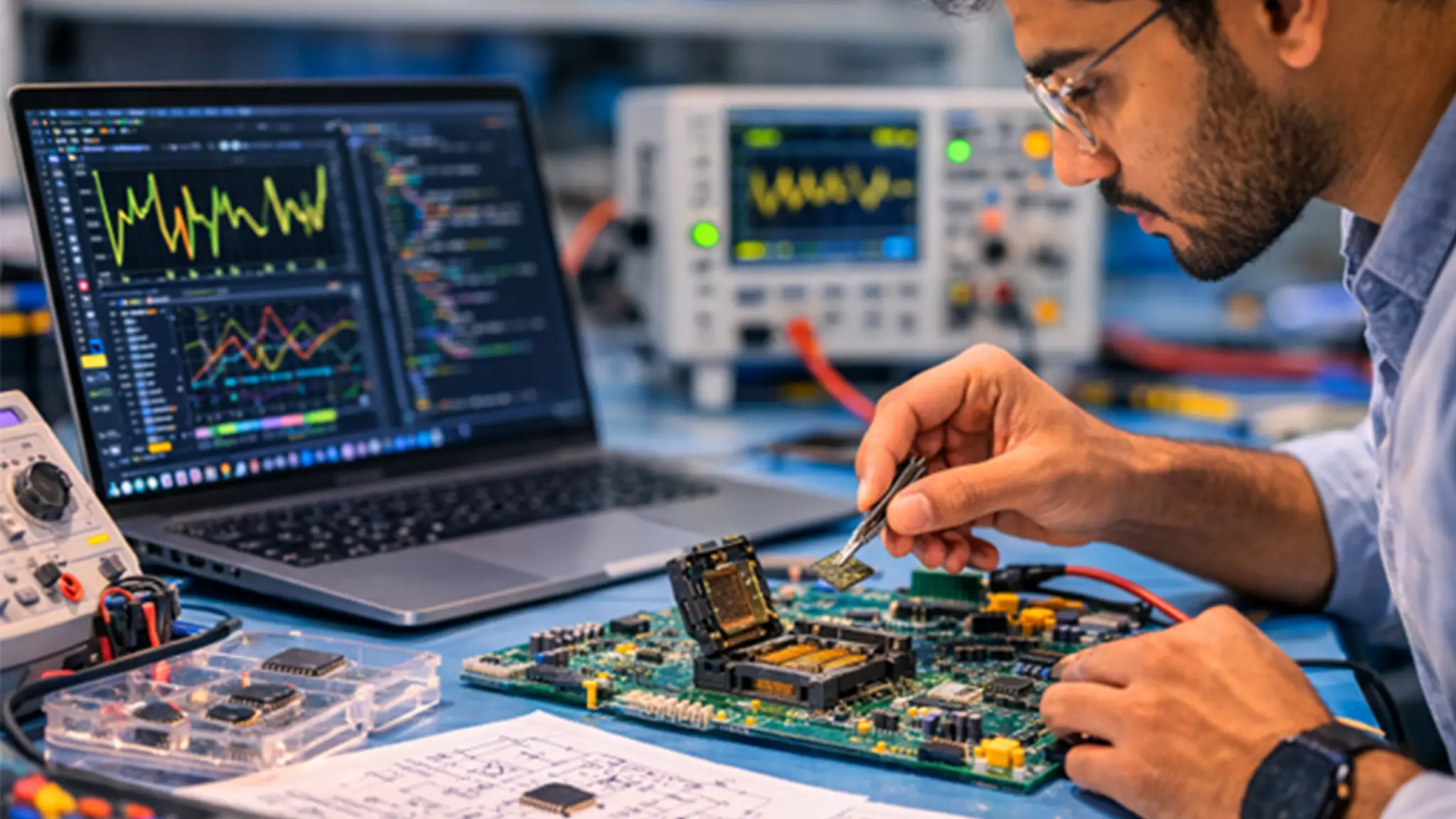
When a semiconductor team begins validating a new processor or FPGA, they rarely solder the chip directly onto the test board. Instead, the device is placed into a test socket, allowing engineers to insert, remove, and test multiple ICs during development.
Why is this important?
During silicon validation and hardware debugging, engineers must repeatedly replace devices, isolate failures, and test multiple silicon revisions. Permanently soldering an IC makes this process slow, risky, and expensive.
For procurement teams, project managers, and hardware engineers, the question often arises during board development:
Are IC sockets necessary, or can integrated circuits simply be soldered directly onto the PCB?
The answer depends on the stage of the product lifecycle. In mass production boards, ICs are usually soldered directly. However, during prototyping, silicon validation, debugging, and automated testing, IC sockets are often essential tools that improve efficiency and reduce risk.
What Is an IC Socket?
An Integrated Circuit (IC) socket is an electromechanical interface that connects an IC package to a PCB without permanently soldering the device.
Instead of solder joints, the socket uses precision contacts (spring probes, elastomers, or stamped pins) to create electrical connections between the IC and the board.
Sockets are commonly used in:
- Silicon validation labs
- Semiconductor reliability testing
- Automated production testing
- Engineering development boards
- Failure analysis environments
As noted in research from the Institute of Electrical and Electronics Engineers (IEEE), semiconductor reliability testing often requires repeated device insertion and removal to evaluate device performance and early-life failure mechanisms.
Because these environments may test hundreds or thousands of chips, sockets provide a reliable interface without repeated soldering.
Are IC Sockets Necessary for Modern Electronics?
IC sockets are not always required, but they become highly valuable when:
- ICs must be replaced frequently
- Silicon revisions are still evolving
- Devices are expensive or limited samples
- Automated test equipment must evaluate large numbers of chips
In these scenarios, sockets dramatically reduce development time and help protect expensive semiconductor devices.
IC Socket vs Direct Soldering
When deciding whether to use an IC socket, engineers often compare socketed devices with directly soldered components.
| Factor | IC Socket | Direct Soldering |
| Device replacement | Easy to swap ICs | Requires desoldering |
| Development speed | Faster iteration | Slower rework cycles |
| Risk of PCB damage | Very low | Higher during rework |
| Production cost | Higher | Lower |
| Signal integrity | Slightly reduced | Optimal |
| Best use case | Prototyping, testing | High-volume production |
For early-stage development and validation, sockets typically provide greater flexibility and faster debugging.
Why Use an IC Socket?
1. Faster Prototyping and Hardware Iteration
During early development, engineers often test multiple revisions of silicon.
If the IC is soldered directly:
- The chip must be desoldered for every change
- PCB pads risk damage during rework
- Debugging cycles slow down significantly
With a socket, engineers can swap devices in seconds, enabling faster experimentation and shorter validation cycles.
2. Protection for Expensive Semiconductor Devices
Many high-performance ICs such as:
- Processors
- FPGAs
- RF chips
- AI accelerators
can cost hundreds or thousands of dollars.
Repeated soldering exposes these devices to thermal stress and potential damage. Sockets eliminate this risk because the chip never needs to be removed using heat.
3. Faster Debugging and Failure Isolation
During board bring-up, engineers must quickly determine whether a problem originates from:
- The silicon
- The PCB design
- Firmware or software
With a socketed device, engineers can quickly replace the IC and retest, helping isolate the source of the issue much faster.
4. Essential for Semiconductor Testing
IC sockets play a critical role in semiconductor testing systems.
They provide the electrical interface between:
- The Device Under Test (DUT)
- Automated Test Equipment (ATE)
These systems evaluate:
- Electrical performance
- Manufacturing defects
- Long-term reliability
- Early-life failures
Because testing often requires thousands of insertion cycles,specialized test sockets are designed for durability and high signal integrity.
Common Types of IC Sockets Used in Semiconductor Testing
Different IC packages require different socket designs.
BGA Test Sockets
Used for high-pin-count devices such as processors, GPUs, and FPGAs.
QFN and QFP Sockets
Common for analog ICs, microcontrollers, and communication chips.
Burn-In Sockets
Designed to operate at high temperatures during reliability testing to detect early failures.
According to reliability studies referenced by the Institute of Electrical and Electronics Engineers, burn-in testing exposes semiconductor devices to elevated stress conditions to detect weak components before deployment.
Example: Ironwood Electronics IC Socket for Semiconductor Validation
One widely used solution is the SG-series BGA test socket from Ironwood Electronics.
These sockets are used in:
- FPGA validation
- Processor characterization
- High-speed semiconductor testing
- Reliability testing environments
Typical capabilities include:
| Feature | Typical Specification |
| Bandwidth | Up to 40 GHz |
| Contact resistance | <30 mΩ |
| Temperature range | −35°C to +125°C |
| Current per pin | Up to 2A |
| Insertion cycles | 2,000+ cycles |
These sockets use embedded elastomer contact technology to maintain strong electrical connections while supporting repeated device insertion.
Through its partnership with Globetek, semiconductor companies can access these advanced IC socket solutions along with technical support in selecting the correct configuration.
We work with engineering and procurement teams to identify sockets based on:
- IC package type
- Signal speed requirements
- Thermal conditions
- Test environment
This helps ensure reliable test setups and avoids costly design revisions.
What Happens If You Don’t Use IC Sockets?
Skipping sockets during development can introduce several challenges.
Difficult IC Replacement
Replacing a faulty chip requires desoldering the device and installing a new one. Repeated rework can damage PCB pads.
Slower Validation Cycles
Each silicon revision would require manual rework, slowing debugging and testing.
Higher Risk of PCB Damage
Repeated heating during desoldering can weaken PCB traces and solder pads.
Reduced Testing Efficiency
Large semiconductor test environments require quick device swapping. Without sockets, test throughput would drop dramatically.
How to Select the Right IC Socket
Selecting the correct socket requires matching it to the IC and testing environment.
Selection ParameterWhy It MattersIC packageDetermines footprint compatibilityPitchFine pitch requires precision contactsSignal speedHigh-speed devices need controlled impedanceThermal rangeBurn-in testing requires high temperature toleranceCycle lifeProduction testing may require thousands of insertions
Working with experienced suppliers helps ensure the socket supports both electrical performance and mechanical durability.
Example Test Setup Using an IC Socket
Engineers often connect sockets within a validation setup like the one below.

The socket allows engineers to swap multiple IC samples while the rest of the test system remains unchanged.
IC Test Socket Suppliers and Manufacturers
Companies such as Ironwood Electronics specialize in high-performance test sockets used in semiconductor validation environments.
Through its partnership with Ironwood Electronics, Globetek supports engineering and procurement teams by helping them:
- Identify compatible IC sockets
- Source sockets for specialized semiconductor packages
- Implement reliable validation and testing setups
Once you’ve decided a socket is the right call, see our complete guide to IC socket types and uses to pick the right one.
Need Help Selecting an IC Socket?
Through its collaboration with Ironwood Electronics, Globetek helps semiconductor companies choose the right IC socket for development, validation, and testing environments.
Engineering and procurement teams can reach out for assistance with:
- Socket compatibility for specific IC packages
- High-speed validation platforms
- Burn-in and reliability testing environments
You can write to us here
Frequently Asked Questions About IC Sockets
Are IC sockets necessary for PCB design?
IC sockets are not always required in final production boards. However, they are widely used during prototyping, debugging, and semiconductor testing, where devices must be replaced frequently.
Do IC sockets affect signal integrity?
Sockets introduce small parasitic effects such as additional inductance and resistance. High-performance sockets minimize these effects to support high-frequency testing.
When should ICs be soldered instead of socketed?
Direct soldering is typically used when designs are finalized and mass production begins.
What are test sockets used for in semiconductor manufacturing?
Test sockets connect ICs to automated test equipment during electrical testing, reliability screening, and silicon validation.
When IC Sockets Become Mission-Critical
While IC sockets may not appear on every production PCB, they are often mission-critical in semiconductor development environments.
They enable:
- Faster hardware validation
- Safe handling of expensive ICs
- Efficient semiconductor testing
- Reduced debugging time
For organizations building or validating new electronic systems, selecting the right IC socket can significantly improve development efficiency and test reliability.
Read More