
Published on Oct 07, 2023
Best Way to Debug an SoC Prototype: Why Engineers Use High Pin Count IC Test Sockets
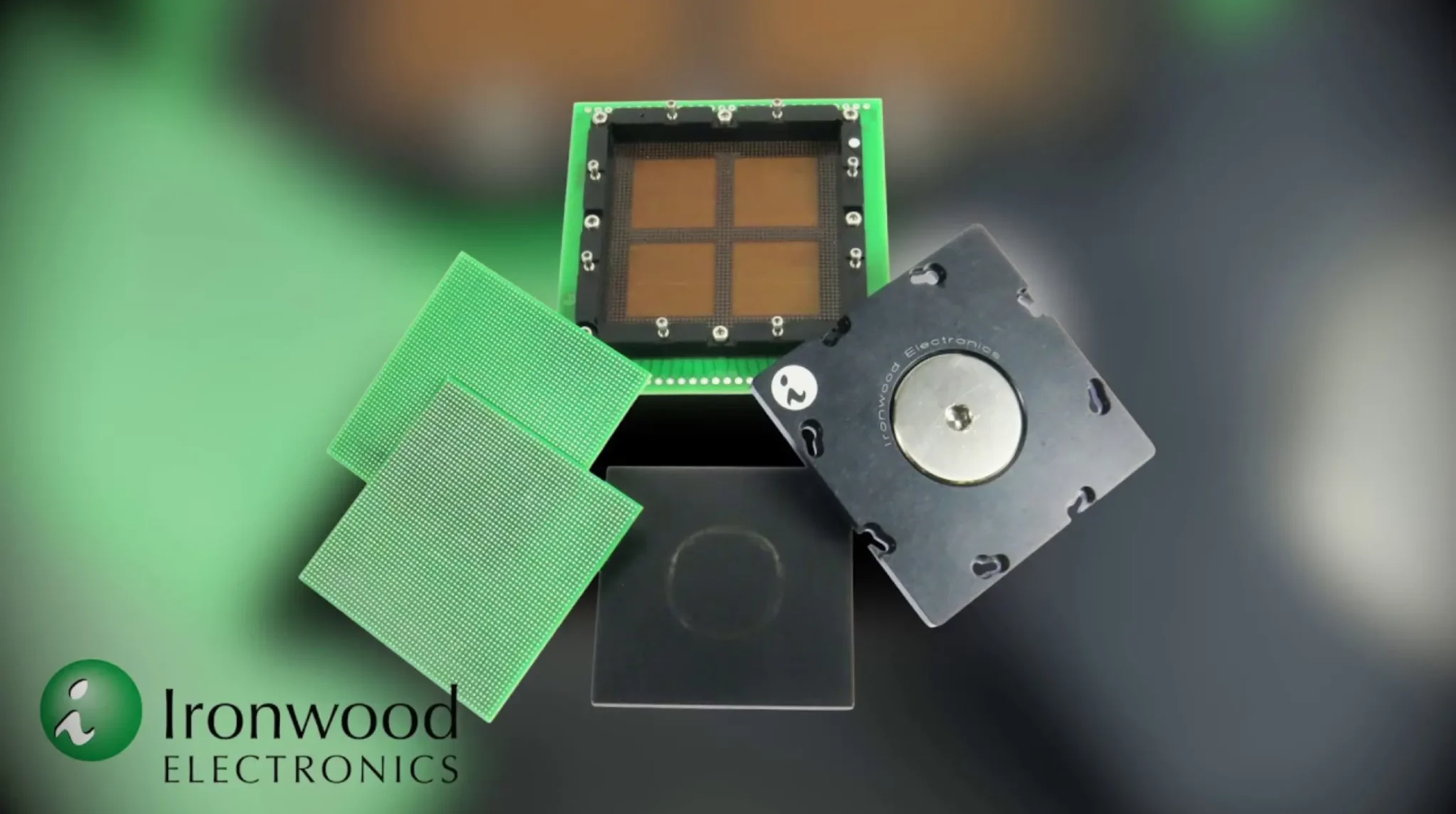
The first board with a new SoC is like a Pandora’s box. When something fails, you need to know whether the fault lies in the chip – is it the board or the setup?And you will have to do it keeping the device intact, since it may be one of only a handful you have.
High pin count SoCs give a fault many places to hide: a fault can sit in any block on the die, on the board around it, or in the test setup.
An IC test socket changes how that goes. The SoC sits in a socket that connects to every pad, which means you can swap, probe and retest in minutes. Without needing a soldering iron.
Why soldering slows debugging down
On a soldered prototype, every experiment adds time and rework. You desolder the SoC, clean the pads and solder a replacement, and each heat cycle puts the chip and the board at risk. Fine-pitch BGAs raise that risk further.
And so, as engineers, we end up testing fewer hypotheses. And one bad rework can cost a prototype that is hard to replace.
How a test socket makes debugging faster
IC sockets help us bypass that lane entirely. With one, we can:
- Swap a known-good device. If the board fails with one SoC, drop in another. A fault that follows the chip points to the device, and a fault that stays points to the board.
- Move one device between boards. Running the same SoC on a second board separates chip problems from board problems.
- Probe the device directly. Open-top sockets expose the chip surface, so we can probe, scope and trace signals while it runs.
- Repeat tests as often as you need. The same device can go through many cycles without the repeated heat that soldering adds.
For BGA SoCs, see our guide to BGA IC test sockets.
What changes with a high pin count SoC
A modern SoC has hundreds or thousands of balls, and that raises the bar for the socket.
- Contact consistency. With this many connections, one poor contact can look like a silicon fault. Look for low, consistent contact resistance across every pin.
- Compression force. Force varies with pin count, pitch and contact technology, so a back support plate called a stiffener is used in almost all BGA socket designs. Without one, the board can flex under the load.
- Power delivery. SoCs run many power rails, so check current per pin and self-inductance.
- Heat. SoCs run hot during validation. Some sockets use a compression plate with a heat sink screw, and spring pin contact technology is often chosen when thermal requirements are high.
Ironwood also offers probing and logic analyzer adapters for BGA packages, which help when you need to trace signals between the SoC and the board.
A typical debug workflow (example)
Say your team has a new SoC prototype that boots on one board and hangs during bring-up on another. With a socket, the process looks like this:
- Check power rails and clocks on the bare board before the SoC goes in.
- Place the SoC in the socket on the board that fails.
- Swap in a second sample of the same chip. If the failure repeats, suspect the board.
- Move the original chip to the board that works. If it boots there, the first board is the problem.
- Probe the suspect signals with an oscilloscope, using an open-top socket for access.
- Fix the board, put the same SoC back and retest.
On a soldered board, each of these steps would call for rework and the risk that goes with it.
What to look for in a socket for debugging
Debugging asks more of a socket than basic prototyping does.
- Bandwidth and signal integrity. A socket adds some loss to the signal path, so pick one with enough bandwidth to keep that effect small on the signals you measure.
- Open access. Choose an open-top design if you need to probe the chip.
- Low, consistent contact resistance, so a poor connection can’t pass as a real fault.
- Package support, including fine pitch and high ball counts.
Our guide to IC socket types compares the contact technologies.
Talk to us
Globetek is the exclusive distributor of US-based Ironwood Electronics in India. The company has over 8,000 products, and has built over 100,000 sockets, one million adaptors and over 15,000 catalog parts for the semiconductor industry across the world.
Browse our IC test sockets and adapters, or get in touch and our team will help you find the right socket for your prototype.
FAQs
What is the best way to debug an SoC prototype?
Use an IC test socket. It lets you swap chips, move one device between boards and probe signals without soldering, which isolates whether a fault is in the chip or the board and protects expensive prototype devices from rework damage.
Can a test socket affect signal integrity?
Yes. A socket adds some loss to the signal path, which is why bandwidth matters. A high-bandwidth socket keeps the effect small so you can trust your measurements.
What is the difference between an open-top and a clamshell socket?
An open-top socket leaves the top of the chip accessible for probing. A clamshell socket closes over the device with a lid for quick insertion and removal. Pick based on whether you need direct access to the chip while it runs.
How many pins can an IC test socket support?
Ironwood states that its BGA and QFN sockets support pitches down to 0.3 mm and pin counts up to 5000. The right socket depends on your package, pitch and speed, so share your device details with our team.
Read More